Contact us
Who are we ?
My account
My cart
EN
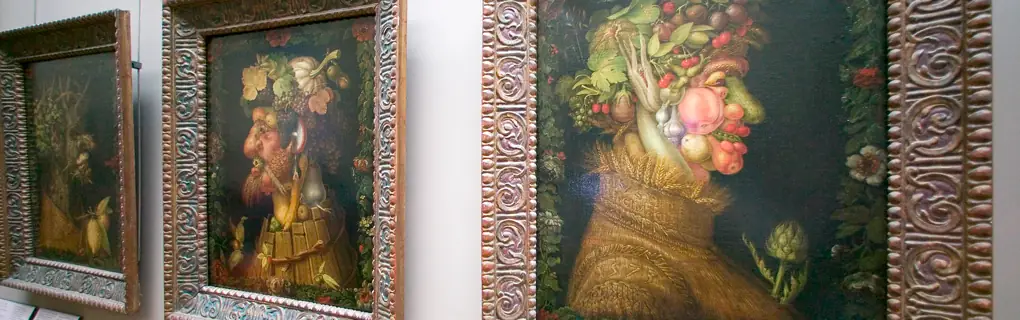
Cultural destination par excellence, Paris has countless museums, from the major international institutions to the little unusual museums that very few people know. There's enough to spend several days exploring the museums of Paris.
To see a little clearer among over 130 museums sheltered by Paris, here's a quick round-up of the best museums in Paris:
Note also, for photography, the Jeu de Paume museum; for music, the Cité de la Musique; for Paris's history, the Carnavalet Museum. For specific artists, there's the Dali museum in Montmartre, the Musée Delacroix, the Picasso Museum, or the Rodin museum - plus the exhibitions of the Grand Palais, which attracts large numbers of visitors at every event.
Museums reflect the history and cultural richness of the capital. Whatever your age or tastes, there is something for everyone!
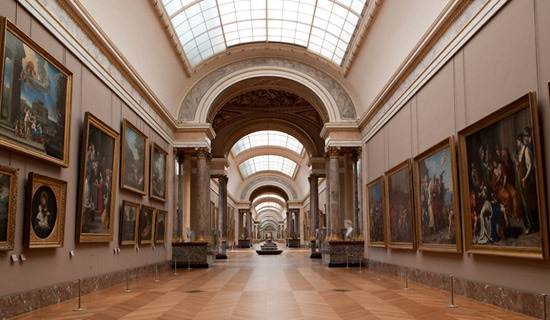
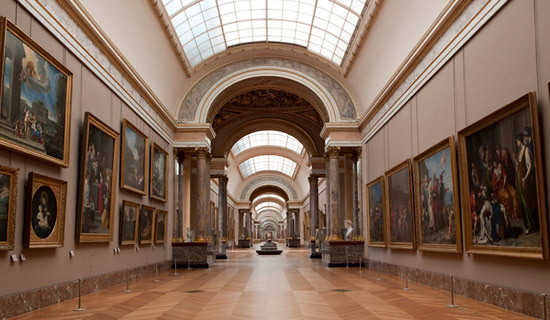
Located in the heart of Paris in the former residence of the kings of France, discover the wonders of the largest museum in the world and its treasure of over 35,000 works: The Louvre Museum.
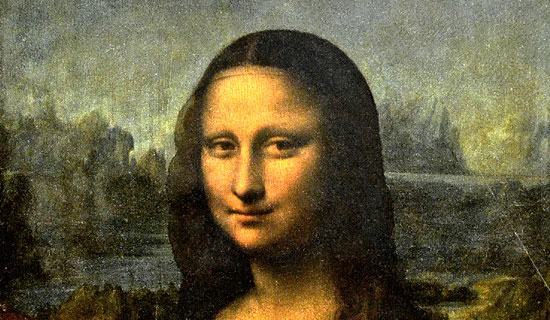
During your visit, you will cross the history and the world through the greatest masterpieces of the Louvre: the Mona Lisa, Venus de Milo, the Winged Victory, the Apollo Gallery, the Coronation of Napoleon.
With 210,000 sqm - 60,600 of which are devoted entirely to exhibitions - and 10 million annual visitors, the Louvre is one of the three most important museums in the world, and the 3rd most visited monument in Paris behind Notre-Dame Cathedral and the Sacré-Cœur Basilica.
The Louvre collections are spread over 2 floors - a ground floor and a mezzanine - each divided into three wings: Denon, Sully, and Richelieu.
Visiting the Louvre museum is structured around 8 departments:
Main masterpieces to discover at the Louvre Museum
You have to visit the Louvre two or three times, or more, to really do it justice. If you only have a few hours, here's a feasible circuit to see the most famous masterpieces:
In the Carrousel gallery (the access point to the Louvre Museum), you'll find shops, restaurants, and bookstores. Every evening at dusk, the Louvre Pyramid lights up - a perfect moment to combine your visit with an evening stroll through the Tuileries gardens.
Housed in the former Orsay railway station, inaugurated for the Universal Exhibition of 1900, the Musée d'Orsay is one of the most prestigious museums in Paris after the Louvre, with over 3 million visitors annually.
Known worldwide for its rich collection of Impressionist art, the Musée d'Orsay covers all artistic creation of the Western world from 1848 to 1914 - painting, architecture, sculpture, decorative arts, and photography.
In late 2011, the museum reopened all of its spaces completely renovated, with new rooms including an additional 400 m² for Post-Impressionism, a restructured Impressionist Gallery, and a new "aquatic" café designed by the Campana brothers.
Discovering the Orsay Museum
The Musée d'Orsay, smaller than the Louvre, is still impressive and has the largest collection of Impressionist works in the world (Renoir, Monet, Manet, Van Gogh). Here is a list of essential works you can visit with your personal guide:
Themed visits
To make the most of your visit, follow one of these themed trails:
You'll also find works by Bonnard, Boudin, Caillebotte, Cézanne, Corot, Degas, Gauguin, Manet, Millet, Monet, Pissarro, Renoir, Seurat, Signac, Sisley, Toulouse-Lautrec, and Van Gogh.
Planning your visit
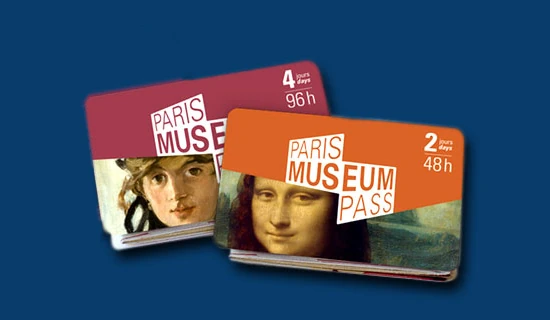
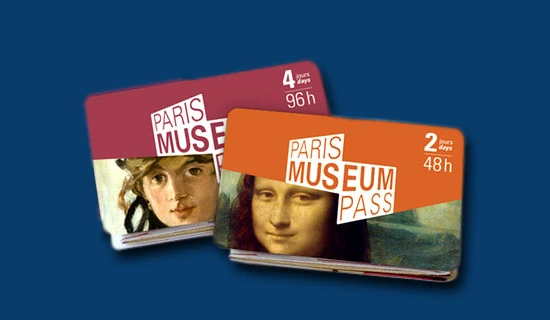
To see the most in the least amount of time, consider the Paris Museum Pass, which grants skip-the-line access to over 50 museums including the Louvre and Orsay. If you'd rather have an expert bring the collections to life, our private tour of the Louvre and small-group guided tour are both excellent ways to see the masterpieces without missing a thing.
OUR OTHER ARTICLES
IN THE SAME THEME:
➤ The Seine and the bridges of Paris➤ The Eiffel Tower➤ The monuments of Paris➤ The districts of Paris
OUR SOCIAL NETWORKS
Follow us on :